Soft Opening for Restaurants: 3 Ideas to Apply at Your Place
Soft opening in English, marcha blanca in Spanish. And in Portuguese, what do we call this period of testing, of fine-tuning the details, of putting the concept into real-life practice?
The truth is, in Portuguese there's no expression that encompasses this phase of launching a foodservice business. But just because there's no word for it doesn't mean this moment should be treated carelessly or ignored. Never open "for real" without first understanding the details that can be corrected or improved.
I've been observing, here in Lima — the gastronomic capital of Latin America — the opening of all kinds of establishments. Famous chef restaurants, cafés, themed restaurants... All of them, without exception, spend about 20 days operating in marcha blanca format, the equivalent of a soft opening.
I'd like to walk you through what they do during this period, what the advantages are, and what lessons can come from this testing phase before the official launch.
1. The Café and the Power of Customer Feedback
While walking down the street, I came across a sign strategically placed at the entrance of a café, almost like an invitation. The message was clear and direct: 20% off the entire menu in exchange for your feedback on the products and service.
Drawn in by the discount — and by curiosity about a new place — I went inside. And then came the golden sequence of a well-executed marcha blanca: the attendant brought me the menu, briefly explained the items, reminded me about the discount, and stepped back.
In other words, she gave me the time I needed to browse the menu, check out the pastry display, and decide at my own pace. Attentive service without rush or pressure — exactly what I expect from a good café.
Remember: observing your team's behavior and guiding them on the subtleties of good service is essential during these precious days of quiet operation. The establishment isn't yet busy, and the owner (or manager) can and should use this time to fine-tune processes.
2. The Themed Restaurant and the Impact of Social Media
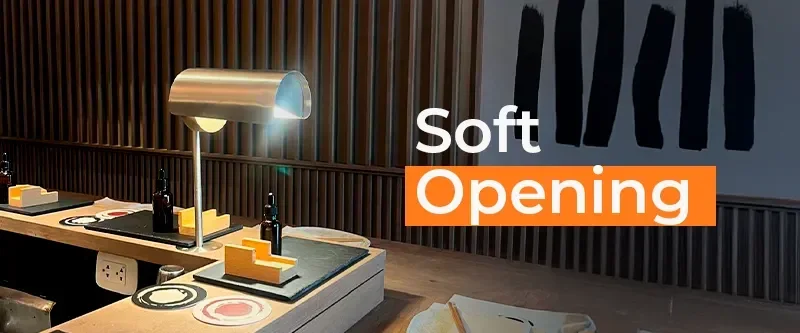
My experience with this second example started with a post that appeared on my Instagram. Drawn in by the aesthetics of the photo, I clicked to explore the profile. On the feed, just a few images — all of architectural details: low lighting, a counter, Japanese-inspired wall features.
Bingo: a new restaurant, very close to where I live, was in the process of opening.
I went there and was greeted with the explanation:
"We're in marcha blanca, so our hours are still limited: we're open from 12pm to 3pm and reopen from 7pm to 10pm. After that, we'll have continuous hours."
I came back the following day, a Friday, to try the counter that had caught my eye on social media. At noon, I was the only customer in the restaurant, which gradually filled up.
Just like at the café, the soft opening period also offered a 20% discount. I had lunch and posted on my own profile, tagging the restaurant and reminding my followers about the promotion through the following Sunday.
The restaurant earned free publicity and completed my discovery journey — which, once again, had begun on social media.
3. The Famous Chef's Restaurant and the Power of the Food Community
Chef Jorge Muñoz runs several establishments in Lima and is also behind the restaurant Oqre at one of Cusco's most celebrated hotels, the Belmond Monasterio. A respected figure in the Peruvian food scene, he opened a new restaurant this month: Casa Sarao, which blends Spanish cuisine with Peruvian ingredients.
What was the opening strategy?
Lunches and tastings for fellow chefs in the city, recognized food influencers, and planned social media posts about a month before the official launch.
The "omnipresence" effect — generated by tags from other chefs and specialist content creators — was enough to build recognition, authority, and desire. After all, who wouldn't want to visit a new restaurant that already opens with the endorsement of the local community?
Conclusion: A Quiet Period That Teaches a Lot
The soft opening — or marcha blanca — is more than just a testing phase. It's a period of learning, adjustments, and genuine connection with your audience. It serves to stress-test the concept, train the team, calibrate service, and, as a bonus, generate organic visibility.
There may be no Portuguese word for it, but there's something essential that this stage conveys: the importance of starting well, before you truly open your doors.

A nice, practical piece — the main takeaway being that a soft opening is an investment in getting things right, not a sign that you're not ready. The 20% discount-for-feedback model is a particularly clever approach worth noting.