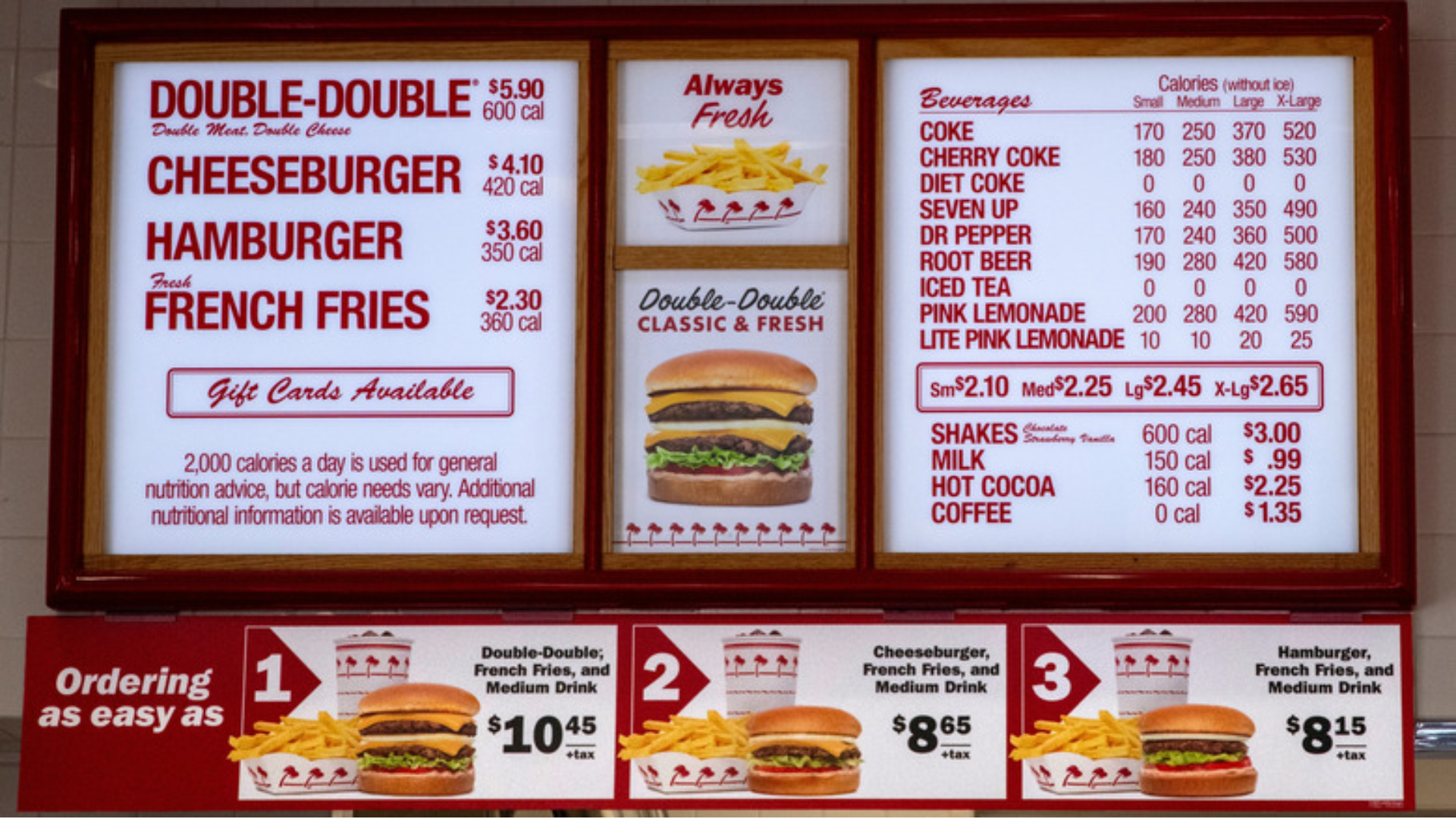
The official menu has four items: Hamburger, Cheeseburger, Double-Double, and French fries.

But there's a secret menu that's nowhere to be found. Customers have to discover it—and that's become part of the brand's culture. The famous "Animal Style," for example, is a hamburger with a special sauce, grilled onions, and patty brushed with mustard before going on the grill. Enjoy OC. It's not on the menu, but any employee knows how to make it.

That's the intelligence behind the simplicity: the closed menu frees up the operation to be obsessed with execution. The fries are never frozen. The meat never has been. That's why the network's geographic expansion respects a maximum radius from distribution centers—to ensure that ingredients always arrive fresh.

If you can't maintain the standard, you don't open a store. Simple as that.

The calculation most managers don't make

Here's the point that matters most to those who operate a restaurant.

In-N-Out pays above the market average. Well above. A store manager has, on average, 17 years of service and a salary close to US$183,000 annually.

In the short term, this seems like a cost. In In-N-Out's logic, it's an investment in consistency. Less turnover means a team that knows the product, defends the standard, and transmits the culture to newcomers.

The result? The company appears among the best companies to work for in Glassdoor rankings—and customers notice this in the service.

Happy employee. Consistent product. Loyal customer. Line at the door.

It's not magic. It's management.

What a restaurant in São Paulo can learn from this

You don't need 400 stores to apply this logic.

You need to know what you won't compromise on. What is your "fresh and never frozen"? What is your secret menu—that dish that regular customers order without needing to read the menu? What is the experience that makes someone drive longer than they should just to come to you?

Growing without losing your essence is not a contradiction. It's strategy.

In-N-Out has proven this for almost 80 years. With burgers, fries, and a family that's in no hurry to sell what it's built.

Want to understand how to apply this logic of positioning and brand authority to your restaurant's marketing? That's exactly what we do at Contágio. Let's talk.